Hair Color Terms You Should Know Before Coloring
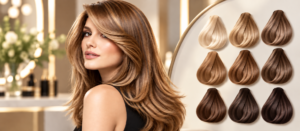
If you are planning to color your hair, you may come across many technical words that can feel confusing. Understanding basic hair color terms can help you choose the right shade, communicate better with your stylist, and avoid unwanted results.
Whether you are coloring your hair at home or visiting a salon, learning these important hair color terms can make the process much easier.
In this article, we will explain the most common hair color terms you should know before coloring your hair.
Base Color
Base color refers to your natural hair color before any coloring process begins.
Your base color plays an important role in determining how the final shade will look.
For example, blonde hair may absorb color differently than dark brown or black hair.
Undertone
Undertone refers to the warm, cool, or neutral tones underneath your hair color.
Understanding undertones is important because they affect how a hair color shade appears on your hair.
- Warm undertones include gold, red, orange, and copper.
- Cool undertones include ash, blue, violet, and silver.
- Neutral undertones are a balance of both warm and cool tones.
Hair Level
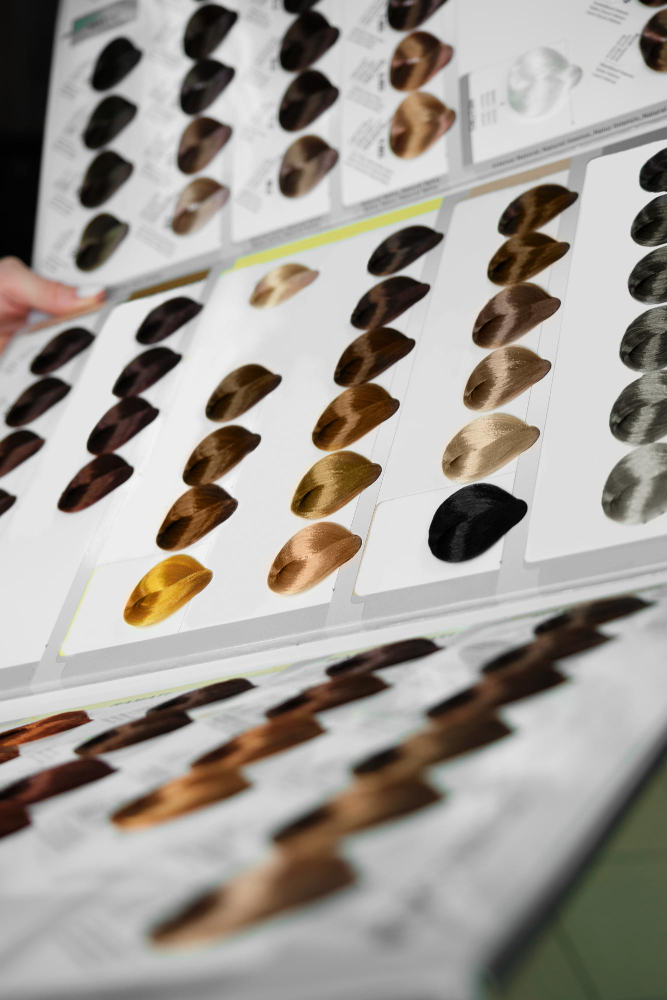
Hair level describes how light or dark your hair is on a scale from 1 to 10.
- Level 1 is black
- Level 5 is medium brown
- Level 10 is the lightest blonde
Hair levels help stylists determine how much lightening or darkening is needed.
Developer
Developer is a cream or liquid mixed with hair color to activate the coloring process.
Different developer strengths create different results.
- 10 volume developer deposits color without much lightening
- 20 volume developer lifts hair one to two levels
- 30 volume developer provides more lift
- 40 volume developer is very strong and used carefully for major lightening
Ammonia-Free Hair Color
Ammonia-free hair color uses gentler formulas that are often less harsh on the hair and scalp.
Many people choose ammonia-free products to reduce dryness and irritation.
Permanent Hair Color
Permanent hair color changes the natural pigment inside the hair shaft.
It lasts longer than other types of color and is commonly used for grey coverage and major color changes.
Semi-Permanent Hair Color
Semi-permanent hair color coats the outer layer of the hair and gradually fades over time.
It is less damaging than permanent color and is ideal for trying new shades.
Temporary Hair Color
Temporary hair color stays on the surface of the hair and usually washes out after one or a few shampoos.
It is often used for events, parties, and short-term color changes.
Highlights
Highlights are lighter sections of hair added throughout the head to create dimension and brightness.
Highlights can be subtle or dramatic depending on the look you want.
Lowlights
Lowlights are darker sections added to the hair to create depth and contrast.
They are often used to balance overly light hair colors.
Balayage
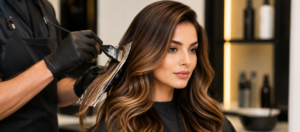
Balayage is a coloring technique where the color is painted onto the hair by hand for a soft, natural look.
Balayage usually creates a sun-kissed effect with less noticeable root regrowth.
Ombre
Ombre is a hair color style where the roots stay darker and the ends become lighter.
The transition from dark to light is more noticeable than balayage.
Toner
Toner is used after lightening or bleaching hair to adjust unwanted tones.
For example, toner can help remove brassiness from blonde hair and create cooler or warmer shades.
Brassiness
Brassiness refers to unwanted yellow, orange, or red tones that appear after coloring or bleaching hair.
Purple shampoos and toners are often used to reduce brassiness.
Bleach
Bleach is a strong chemical product used to lighten the natural pigment in the hair.
It is often necessary for achieving blonde shades, fashion colors, or dramatic color changes.
Root Touch-Up
A root touch-up is the process of coloring the new hair growth near the scalp.
Root touch-ups are commonly done every 3 to 6 weeks, especially for grey coverage.
Grey Coverage
Grey coverage refers to how effectively a hair color product can cover grey or white hair.
Some formulas are specifically designed for stubborn grey hair.
Hair Porosity
Hair porosity refers to how well your hair absorbs and retains moisture and color.
- Low porosity hair resists absorbing color
- High porosity hair absorbs color quickly but may fade faster
Understanding hair porosity can help you choose the right products and coloring method.
Patch Test
A patch test is a safety test done before using hair color.
It helps identify possible allergic reactions to the product.
You should always do a patch test 24 to 48 hours before coloring your hair.
Color Correction
Color correction is the process of fixing unwanted hair color results.
This may involve correcting orange tones, removing dark dye, or evening out patchy color.
Color correction is often best done by a professional stylist.
Virgin Hair
Virgin hair refers to hair that has never been colored, bleached, or chemically treated.
Virgin hair usually reacts differently to hair color compared to previously treated hair.
Double Process Color
Double process color means the hair is first lightened with bleach and then colored with the desired shade.
This process is often used for blonde, pastel, and fashion colors.
Gloss or Glaze
A gloss or glaze treatment adds shine to the hair and can refresh faded color.
It is often used between color appointments to improve the look of the hair.
Color Melt
Color melt is a blending technique where multiple shades flow smoothly into each other.
It creates a soft and natural transition between colors.
Ash Tone
Ash tones are cool shades with blue, green, or violet undertones.
They are commonly used to neutralize warm or brassy tones in blonde and brown hair.
Understanding basic hair color terms can help you make better decisions before coloring your hair.
Knowing the difference between balayage and ombre, permanent and semi-permanent color, or toner and bleach can help you achieve the look you want with fewer mistakes.
Whether you color your hair at home or in a salon, learning these hair color terms will make the process easier and more successful.
FAQs
Why should I know hair color terms before coloring my hair?
Understanding hair color terms helps you communicate better with your stylist and choose the right shade and technique.
What does hair level mean?
Hair level refers to how light or dark your hair is on a scale from 1 to 10.
What is the difference between balayage and ombre?
Balayage is hand-painted for a softer look, while ombre has a more noticeable transition from dark roots to light ends.
What is brassiness in hair color?
Brassiness refers to unwanted warm tones like yellow, orange, or red that appear after coloring.
What does developer do in hair coloring?
Developer activates the hair color and helps it penetrate the hair shaft.

 Yuthika Professional Crème Hair Color
 Yuthika Highlift
 Evano Beard Color Creme
 CosGlam
 Yuthika Ultracare Range
 Yuthika Vertix Range
 Yuthika Argan Oil
 Nish Daily Care Range