Hair Color Numbering System Explained for Salon Pros
Hair Color Numbering System Explained for Salon Professionals
Professional hair color can look complicated at first. A salon shade chart may contain numbers such as 4.0, 5.3, 6.1, 7.4 or 8.31, and understanding what these numbers mean is essential for accurate shade selection and formulation.
This system is known as the hair color numbering system.
For salon professionals, hair color numbers provide a structured way to identify the depth and tonal direction of a shade. Instead of relying only on names such as “medium brown,” “golden blonde” or “ash blonde,” professional numbering systems make shade communication more precise.
Understanding hair color numbers can help stylists during consultations, formulation, grey coverage, toning, color correction and repeat salon appointments.
This guide explains the professional hair color numbering system in simple terms and shows how salon professionals can use it more effectively.
What Is a Hair Color Numbering System?
A hair color numbering system is a method used by professional hair color brands to classify shades according to their depth and tone.
A typical shade code might look like:
5.0
6.1
7.3
8.34
In many professional systems, the first number represents the depth or level of the shade.
The number or numbers after the decimal point, slash or separator generally indicate the tone or reflection.
For example:
6.1
The 6 represents the approximate depth of the shade, while the 1 represents its tonal direction.
However, it is important to remember that numbering systems are not completely identical across all hair color brands. Salon professionals should always check the specific manufacturer’s shade chart and technical guide.
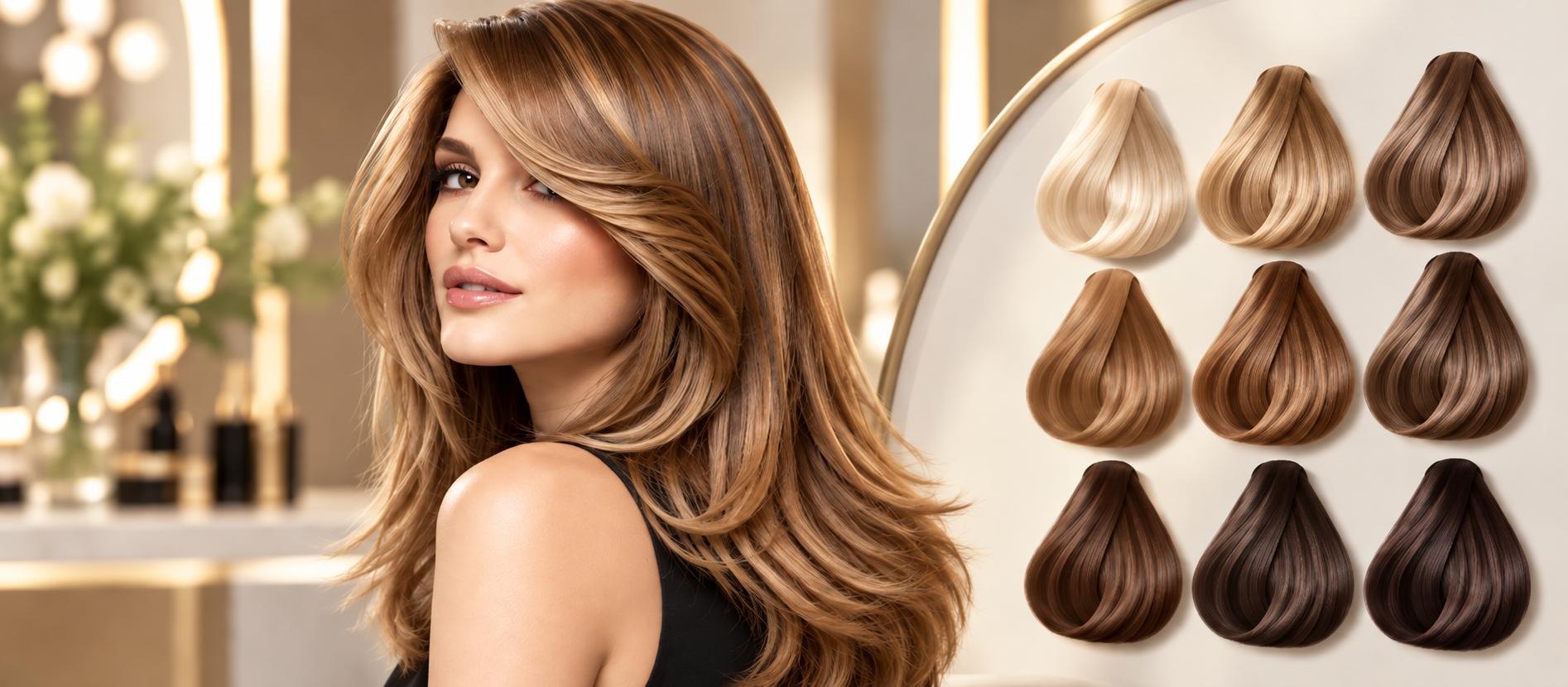
First Number: Understanding Hair Color Levels
The first number in a professional hair color code usually indicates how dark or light the shade is.
A common level system runs from 1 to 10.
A simplified version may look like:
- Level 1 – Black
- Level 2 – Very Dark Brown
- Level 3 – Dark Brown
- Level 4 – Medium Brown
- Level 5 – Light Brown
- Level 6 – Dark Blonde
- Level 7 – Medium Blonde
- Level 8 – Light Blonde
- Level 9 – Very Light Blonde
- Level 10 – Lightest Blonde
In general, the lower the number, the darker the shade.
The higher the number, the lighter the shade.
This means that a Level 4 shade will normally appear darker than a Level 7 shade, regardless of whether the tone is warm, cool or neutral.
Numbers After the Decimal: Understanding Hair Color Tones
The number after the decimal or separator usually represents the tone of the shade.
Tone describes the color reflection visible within the overall depth.
Common tonal families include:
- Natural
- Ash
- Gold
- Copper
- Red
- Mahogany
- Violet
- Pearl
- Beige
For example, a salon shade range might contain:
5.0 – Natural Light Brown
5.1 – Ash Light Brown
5.3 – Golden Light Brown
All three shades are at approximately the same depth, but their tonal appearance is different.
This distinction is one of the most important parts of understanding the hair color numbering system.
What Does .0 Mean in Hair Color?
In many professional color systems, .0 is used to indicate a natural or neutral shade.
For example:
4.0 may indicate a natural medium brown.
6.0 may indicate a natural dark blonde.
8.0 may indicate a natural light blonde.
Natural shades are particularly important in professional coloring because they are frequently used for balanced results and grey coverage.
However, the exact meaning of .0 should always be confirmed with the brand’s technical chart.
What Do Double Numbers Mean?
Professional hair colors may sometimes contain two digits after the decimal.
Examples include:
6.13
7.34
8.31
In many systems, the first number after the decimal represents the primary or dominant tone, while the second indicates a secondary tone.
For example, a shade could combine ash and gold, gold and copper, or copper and red.
This allows manufacturers to create more complex and dimensional shades.
A double-tone shade can look very different from a pure single-tone shade, even when both share the same depth level.
Primary Tone vs Secondary Tone
Understanding the difference between primary and secondary tones can help stylists predict the visual character of a shade.
The primary tone normally has the stronger influence.
The secondary tone adds another reflection or balances the dominant tone.
For example, if a shade contains both gold and copper, it may produce a richer warm effect than a standard gold shade.
If a shade combines ash with another tone, the ash component may help reduce excessive warmth while maintaining dimension.
The exact strength of each reflection depends on the manufacturer’s formulation.
Why Shade Numbers Are Better Than Shade Names Alone
Shade names can be useful for clients, but they may not provide enough technical information for professional formulation.
Terms such as:
- Chocolate brown
- Mocha
- Caramel
- Honey blonde
- Coffee brown
can sound attractive, but they are subjective.
One brand’s “caramel” may look completely different from another brand’s caramel.
A numerical code gives the stylist a more structured indication of both depth and tone.
This is why salon professionals should use the shade number as the primary technical reference and the shade name as a supporting description.
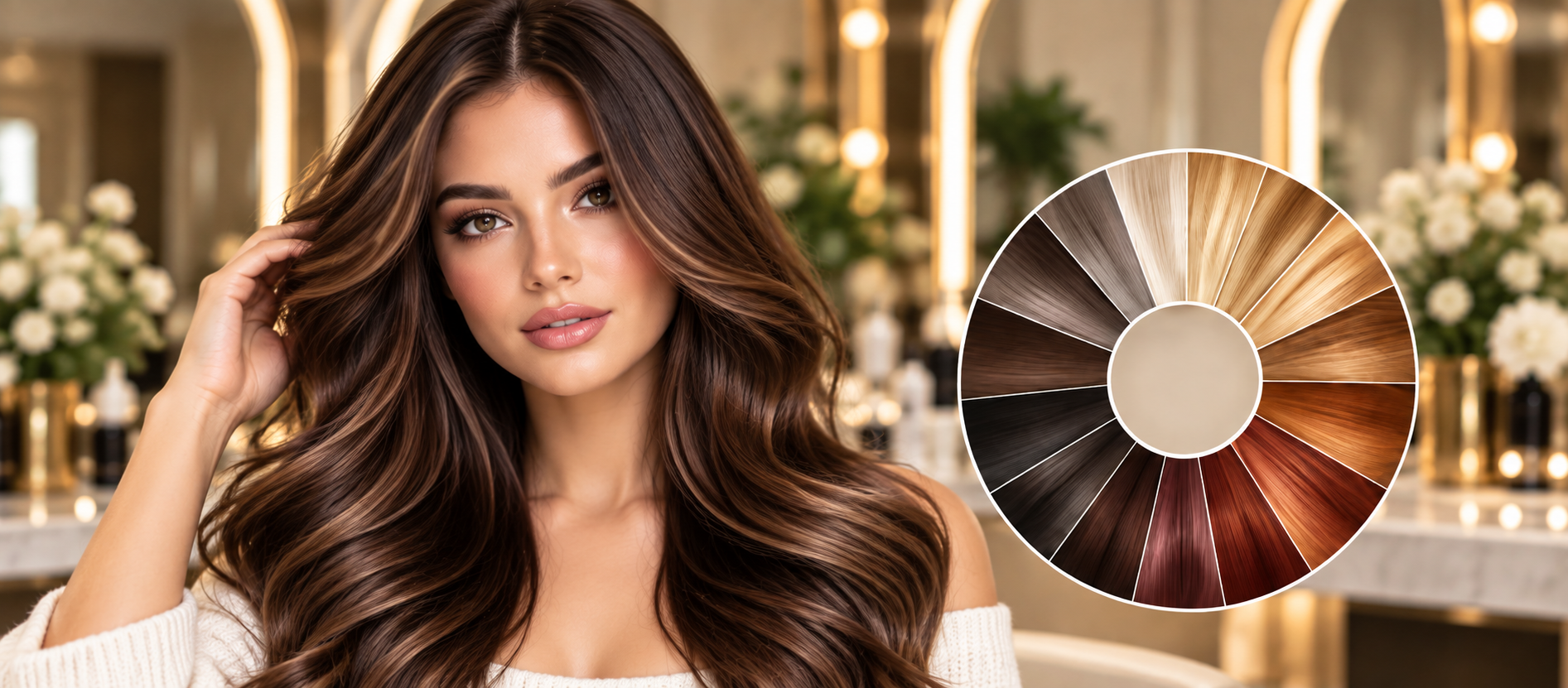
The Hair Color Numbering System and the Color Wheel
Understanding shade numbers becomes more useful when combined with color theory.
Professional colorists use the color wheel to understand how tones interact.
Common neutralizing relationships include:
Blue neutralizes orange.
Violet neutralizes yellow.
Green neutralizes red.
Suppose a client’s hair has exposed orange warmth after lightening.
A stylist may select an appropriate cool or ash tonal direction based on the desired result.
Similarly, unwanted yellow tones may require a violet-based tonal direction.
The shade number helps identify the tone, while the color wheel helps explain how that tone may interact with the client’s existing pigment.
Why the Same Number Can Look Different Across Brands
One important rule for salon professionals is never to assume that the same number means exactly the same shade across every brand.
A 6.1 in one professional range may not look identical to a 6.1 from another manufacturer.
Differences may include:
- Tone intensity
- Base formulation
- Pigment concentration
- Color technology
- Reflect balance
- Level interpretation
That is why stylists switching professional color brands should study the new shade chart rather than automatically transferring formulas from another range.
How to Read a Hair Color Number Step by Step
When you see a professional shade number, read it systematically.
For example:
Shade: 7.3
Step 1: Look at the first number.
The 7 indicates the depth or level.
Step 2: Look at the number after the decimal.
The 3 indicates the tonal direction according to the manufacturer’s chart.
Step 3: Check the actual shade swatch.
The swatch gives a visual reference.
Step 4: Compare it with the client’s starting hair.
The final result depends on what is already present in the hair.
This last step is extremely important.
Hair color is not applied to a blank canvas.
Starting Level Changes the Final Result
A professional shade number describes the intended shade, but it does not guarantee the same result on every client.
Suppose two clients both want the same Level 6 shade.
One begins with natural Level 4 hair.
The other begins with previously colored Level 8 hair.
Even if the same shade is selected, their formulas and final results may be different.
A salon professional needs to consider:
- Current hair level
- Natural or artificial pigment
- Existing tone
- Grey percentage
- Hair porosity
- Previous chemical treatments
- Desired level
- Desired tone
This is why professional color formulation requires more than simply choosing a number from a chart.
Hair Color Numbers and Grey Coverage
The hair color numbering system is also valuable when planning grey coverage.
Natural shades are often used as part of professional grey coverage formulations.
For instance, a stylist may combine a natural shade with a fashion or tonal shade depending on the percentage of grey and desired result.
The exact ratio should be based on:
- Percentage of grey hair
- Resistance of the grey
- Target shade
- Starting level
- Manufacturer recommendations
A client with 20% grey may require a different approach from someone with 80% resistant grey hair.
Hair Color Numbers and Root Touch-Ups
Hair color numbers are especially helpful during repeat salon visits.
If the stylist records the exact previous formula, such as:
- Shade number
- Developer
- Mixing ratio
- Processing time
- Application method
the same or a modified formula can be created during the next appointment.
This improves consistency and makes professional color records more useful.
However, the stylist should still reassess the client’s hair at every appointment because the hair condition, grey percentage and previous lengths may have changed.
Hair Color Numbers and Color Correction
Corrective coloring is one area where understanding numbers becomes especially important.
Imagine a client wants a cool Level 7 result but currently has strong orange warmth.
Simply choosing any shade with the number 7 may not solve the problem.
The stylist must identify:
- The current level.
- The unwanted tone.
- The target level.
- The desired tone.
- The neutralizing tonal direction required.
Professional shade numbering helps organize this process.
It allows the colorist to think in terms of both depth and tone, rather than selecting color based only on what the swatch looks like.
Natural, Warm and Cool Shade Numbers
While exact numbering differs between manufacturers, professional shades can broadly be grouped into three tonal categories.
Natural Shades
Natural or neutral shades are designed to create balanced results and are often important for grey coverage.
Warm Shades
Warm shades may contain reflections such as:
These shades create richness, warmth and vibrancy.
Cool Shades
Cool shades may contain:
- Ash
- Violet
- Pearl
- Blue-based reflections
They may be used when the goal is to create a cooler appearance or balance excessive warmth.
Understanding which number represents each tone in your chosen professional color range is essential.
Common Mistakes Salon Professionals Should Avoid
One common mistake is assuming that shade numbers are universal.
They are not.
Another mistake is focusing only on the first number while ignoring the tonal code.
For example, Level 6 ash and Level 6 copper may have the same depth but produce completely different results.
Other mistakes include:
- Ignoring the client’s previous hair color
- Selecting shades only by swatch appearance
- Forgetting about underlying pigment
- Misreading primary and secondary tones
- Assuming artificial color will lift like natural hair
- Ignoring porosity
- Using another brand’s numbering system as a reference
The safest approach is always to work with the technical chart supplied for the professional range being used.
Hair Color Numbering System During Client Consultation
The numbering system is also valuable during consultation.
Clients often use general descriptions such as:
“I want medium brown.”
“I want a cool blonde.”
“I want something slightly lighter.”
The salon professional can translate these preferences into technical information.
For example:
Current level: 4
Target level: 6
Desired tone: Cool
This provides a much clearer starting point for formulation.
The professional can then explain what is realistically achievable based on the client’s current hair and color history.
Should Clients Choose Their Hair Color Number Themselves?
Professional shade charts can help clients understand available options, but the final formula should ideally be selected by a trained salon professional.
A shade that looks ideal on a chart may behave differently depending on the client’s:
- Natural base
- Previous hair color
- Grey coverage needs
- Underlying pigment
- Hair condition
For professional results, shade selection should be combined with proper hair analysis and color theory.
Why Salon Professionals Should Master Hair Color Numbers
Learning the hair color numbering system makes professional coloring more systematic.
Instead of treating each shade as an individual color, stylists can understand how the entire range is organized.
This makes it easier to:
- Identify shade depth
- Compare related colors
- Choose tonal directions
- Plan neutralization
- Document client formulas
- Communicate with other salon professionals
- Create consistent repeat results
- Handle color correction more confidently
For a professional colorist, shade numbers are essentially the language of hair color.
Understanding the hair color numbering system is an essential skill for salon professionals.
The first number generally describes the depth of the shade, while the numbers that follow indicate its tonal direction. Together, these codes help stylists differentiate between shades that may have the same level but completely different visual characteristics.
However, professional hair color numbers should never be interpreted in isolation.
Successful formulation also requires an understanding of the client’s starting level, existing tone, underlying pigment, grey percentage, color history and hair condition.
Most importantly, numbering conventions can differ between professional color brands. Always refer to the official shade chart and technical instructions for the range you are working with.
With a strong understanding of levels, tones and shade codes, salon professionals can use hair color charts more confidently and create better-informed color formulations.
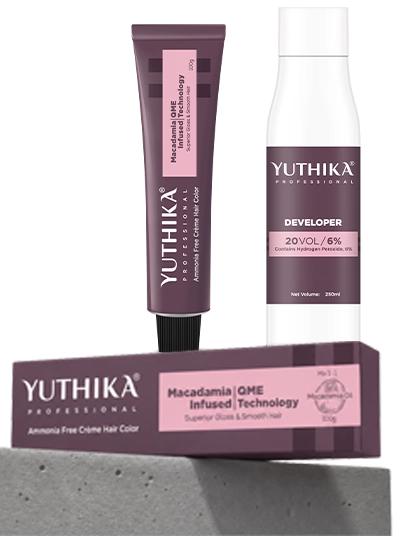
Yuthika Professional offers professional hair color solutions developed for salon professionals and modern color services. Explore the Yuthika Professional range and discover shades designed to support professional salon creativity, consistency and color performance.

 Yuthika Professional Crème Hair Color
 Yuthika Highlift
 Evano Beard Color Creme
 CosGlam
 Yuthika Ultracare Range
 Yuthika Vertix Range
 Yuthika Argan Oil
 Nish Daily Care Range