Hair Color Wheel Guide for Professional Stylists
Hair Color Wheel: A Complete Guide for Professional Stylists
Professional hair coloring is not only about choosing a beautiful shade from a chart. Behind every successful color service is an understanding of how different pigments interact with each other.
That is where the hair color wheel becomes essential.
For professional stylists, the hair color wheel helps explain why certain tones appear during lightening, which colors can neutralize unwanted warmth, and how different shades can be combined to create balanced results.
Whether you are working with brunettes, blondes, red tones, highlights or corrective color, understanding basic color theory can make professional formulation more accurate and predictable.
This guide explains how the hair color wheel works and how salon professionals can apply it during everyday color services.
What Is a Hair Color Wheel?
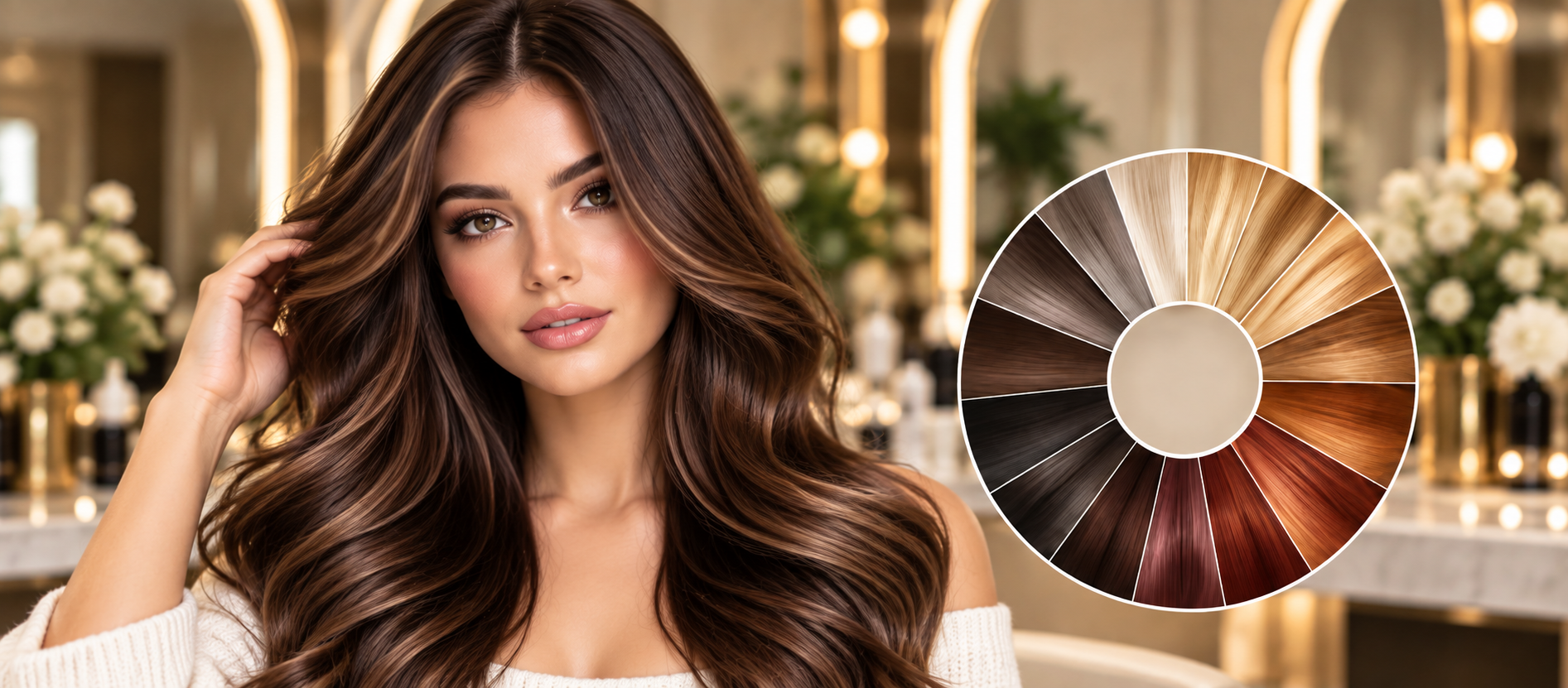
A hair color wheel is a visual representation of colors arranged according to their relationship with one another.
It is based on the traditional color wheel used in art and design, but professional hairstylists apply the same principles to hair pigmentation and color correction.
The color wheel helps stylists understand:
- Primary colors
- Secondary colors
- Complementary colors
- Warm and cool tones
- Neutralization
- Tonal balance
- Color correction
The most important principle for professional hair coloring is that colors positioned opposite one another on the wheel can help neutralize each other.
For example:
Blue neutralizes orange.
Violet neutralizes yellow.
Green neutralizes red.
These relationships form the foundation of many professional toning and corrective coloring decisions.
Primary Colors in Hair Color Theory
The three traditional primary colors are:
Primary colors cannot be created by mixing other colors together.
However, they can be combined to create secondary colors.
In professional hair coloring, primary colors are important because different combinations of red, yellow and blue contribute to the underlying pigments found at different hair levels.
Understanding these colors makes it easier to predict what may happen when hair is lightened or when different tonal families are mixed.
Secondary Colors
Secondary colors are created by combining two primary colors.
The three main secondary colors are:
Red + Yellow = Orange
Yellow + Blue = Green
Blue + Red = Violet
These colors are especially important in salon color correction.
Orange and yellow are frequently exposed during lightening, while violet, blue and green-based tones may be used to help balance unwanted warmth.
Complementary Colors Explained
Complementary colors sit directly opposite each other on the color wheel.
When used correctly, complementary colors can help reduce or neutralize an unwanted tone.
The key complementary relationships in hair color include:
- Red and green
- Orange and blue
- Yellow and violet
For professional stylists, these three relationships are among the most important concepts in color theory.
Blue Neutralizes Orange
Orange tones commonly appear when darker hair is lightened.
For example, a client may want a cool brunette or dark blonde result, but after lifting, the hair reveals visible orange warmth.
In this situation, a blue-based tone may be used to help balance the orange.
However, this does not mean that adding more blue will automatically create a better result.
The stylist needs to consider:
- How strong the orange tone is
- The current level of the hair
- The desired final result
- Hair porosity
- The strength of the corrective product
Using too much cool pigment can create an overly dull or muddy result.
Professional formulation is about balance rather than simply cancelling color.
Violet Neutralizes Yellow
Yellow is commonly seen at lighter blonde levels.
When hair has been lightened to a pale yellow stage, a violet-based toner may help reduce excessive yellow and create a cooler, cleaner blonde appearance.
This principle is frequently used for:
- Cool blonde
- Pearl blonde
- Platinum blonde
- Icy blonde
- Neutral blonde
The amount of violet required depends on the intensity of the yellow and the desired final shade.
If the hair is not light enough, toner alone may not produce the intended result.
Green Neutralizes Red
Red undertones are commonly present in darker hair.
If a client has unwanted red warmth and wants a more neutral or cool brunette result, a green-based tone may help counteract the red.
Green-based correction must be handled carefully.
Too much green on porous or lightened hair can produce an unwanted dull or greenish cast.
Salon professionals should therefore evaluate the intensity of red before choosing the corrective tone.
Why Underlying Pigment Matters
One of the most important uses of the hair color wheel is understanding underlying pigment.
When natural hair is lightened, warm pigments become visible.
A simplified lightening progression may reveal:
- Deep red
- Red-orange
- Orange
- Yellow-orange
- Yellow
- Pale yellow
The exact appearance depends on the natural starting level and the amount of lift achieved.
This is why dark hair does not immediately become a cool blonde simply because a light shade is applied.
The stylist must first consider what underlying pigment is likely to appear.
The hair color wheel then helps determine how that pigment can be enhanced or neutralized.
Warm Colors on the Hair Color Wheel
Warm colors generally include:
- Red
- Orange
- Yellow
- Gold
- Copper
Warm tones can add richness, brightness and dimension to hair.
They are commonly found in shades such as:
- Golden brown
- Copper brown
- Auburn
- Honey blonde
- Golden blonde
- Copper blonde
Warmth is not always something that needs to be removed.
In many salon services, warm pigments are intentionally enhanced to create vibrant and dimensional results.
The goal depends entirely on the client’s desired shade.
Cool Colors on the Hair Color Wheel
Cool tonal families may include:
Cool tones are often used to reduce visible warmth.
They may also be used to create sophisticated shades such as:
- Ash brown
- Cool brunette
- Ash blonde
- Pearl blonde
- Smoky blonde
The relationship between warm and cool tones is one of the most important parts of professional color formulation.
Hair Color Wheel and Toning
Toning is one of the most common applications of the hair color wheel.
After lightening, stylists evaluate the remaining pigment and select a toner based on the desired final result.
For example:
If the hair is strongly yellow and the client wants a cooler blonde, violet may be appropriate.
If the hair is orange and the target is a cool dark blonde, a blue-based tone may be considered.
If the client wants a warm golden blonde, the stylist may choose to enhance rather than neutralize the yellow.
The hair color wheel therefore helps determine whether the existing tone should be:
- Neutralized
- Enhanced
- Softened
- Balanced
Hair Color Wheel in Color Correction
Color correction is another area where the wheel becomes extremely valuable.
Imagine a client arrives with unwanted orange hair after attempting to lighten previously colored brunette hair.
The stylist should not simply apply a darker ash shade without first assessing the hair.
A professional color correction may involve evaluating:
- Current level
- Existing unwanted tone
- Hair condition
- Previous color history
- Desired target level
- Desired final tone
Only after understanding these factors should the corrective formula be chosen.
The color wheel helps identify the tonal direction required, but it is only one part of the overall consultation and formulation process.
Why Neutralization Is Not Always Complete Cancellation
A common misunderstanding is that neutralization means completely removing all warmth.
In reality, professional color often looks more natural when the final result contains a controlled balance of warm and cool pigments.
For example, a brunette shade that is excessively cool may appear flat or artificial.
Similarly, over-toning blonde hair can make it look dull.
The goal is usually not to eliminate every trace of warmth but to control it so the final shade matches the intended result.
Hair Level and Color Wheel Work Together
The hair color wheel should not be used independently from the professional level system.
A stylist first needs to identify the client’s level.
For example:
A Level 5 with red-orange warmth requires a different corrective approach from a Level 9 with pale yellow warmth.
This is because the underlying pigment changes as the hair becomes lighter.
Professional hair coloring therefore combines two important systems:
Hair level tells you how dark or light the hair is.
The hair color wheel helps you understand the tone.
Together, they provide a stronger foundation for accurate formulation.
Using the Hair Color Wheel During Consultation
The color wheel can also help during client consultations.
Clients often describe colors in simple terms such as:
“I don’t want any orange.”
“I want a cool brown.”
“My blonde looks too yellow.”
A professional stylist can translate these concerns into color theory.
For example:
“Too orange” may indicate the need to evaluate blue-based neutralization.
“Too yellow” may suggest violet-based correction.
“Too red” may require assessment of green-based tonal direction.
This helps the stylist communicate the technical reasoning behind the recommended service.
The Importance of Hair Porosity
Color theory alone cannot predict the final result.
Hair porosity can significantly affect how pigments are absorbed.
Highly porous hair may take cool pigments very quickly, particularly on lightened ends.
This means a toner that works perfectly on healthy hair may appear much darker or cooler on porous sections.
Before applying a corrective formula, salon professionals should evaluate:
- Porosity
- Elasticity
- Previous lightening
- Chemical history
- Overall hair condition
This helps reduce the risk of uneven or over-toned results.
Common Hair Color Wheel Mistakes
One common mistake is using the opposite color too aggressively.
For example, if hair has mild yellow warmth, adding an extremely strong violet formula may create an overly cool result.
Other common mistakes include:
- Ignoring the hair level
- Correcting tone without considering porosity
- Using the wrong complementary color
- Trying to tone hair that has not been lifted enough
- Ignoring previous artificial pigment
- Confusing warm tones with unwanted tones
- Assuming every client needs complete neutralization
Professional color correction requires both color theory and careful hair analysis.
Hair Color Wheel and Creative Color Formulation
The hair color wheel is not only useful for correction.
It can also help stylists create new shades.
By understanding how different colors interact, stylists can build tonal combinations that feel richer and more dimensional.
For example, combinations of gold and copper may create warm, luminous results, while ash and violet may contribute to cooler tonal effects.
The key is understanding how much of each tone should be present and how it will interact with the existing base.
Why Every Professional Stylist Should Understand the Hair Color Wheel
For professional colorists, the hair color wheel is one of the foundations of salon color theory.
It can help with:
- Selecting toners
- Neutralizing unwanted tones
- Planning color corrections
- Understanding underlying pigment
- Creating custom formulations
- Communicating with clients
- Predicting how tones may interact
- Achieving greater consistency
The more familiar a stylist becomes with color relationships, the easier it is to understand why a particular result occurred and how it can be adjusted.
The hair color wheel gives professional stylists a clear framework for understanding how colors interact.
Blue can help neutralize orange, violet can help balance yellow, and green can help reduce red. However, professional color formulation involves much more than simply choosing the opposite color.
The client’s hair level, existing pigment, porosity, previous color history, hair condition and desired result all need to be evaluated before selecting a formula.
When used together with professional hair color levels and shade numbering systems, the color wheel becomes an extremely useful tool for salon consultation, formulation and correction.
Mastering these fundamentals helps stylists make more informed color decisions and create balanced, customized results for every client.
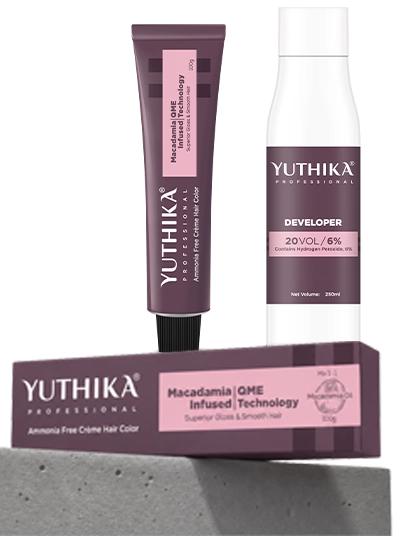
Yuthika Professional offers professional hair color solutions designed for salon professionals and modern color services. Explore the Yuthika Professional range to discover professional color options for creative, consistent and salon-focused results.

 Yuthika Professional Crème Hair Color
 Yuthika Highlift
 Evano Beard Color Creme
 CosGlam
 Yuthika Ultracare Range
 Yuthika Vertix Range
 Yuthika Argan Oil
 Nish Daily Care Range